Lakeside Pier Rebuilt From the Framing Up
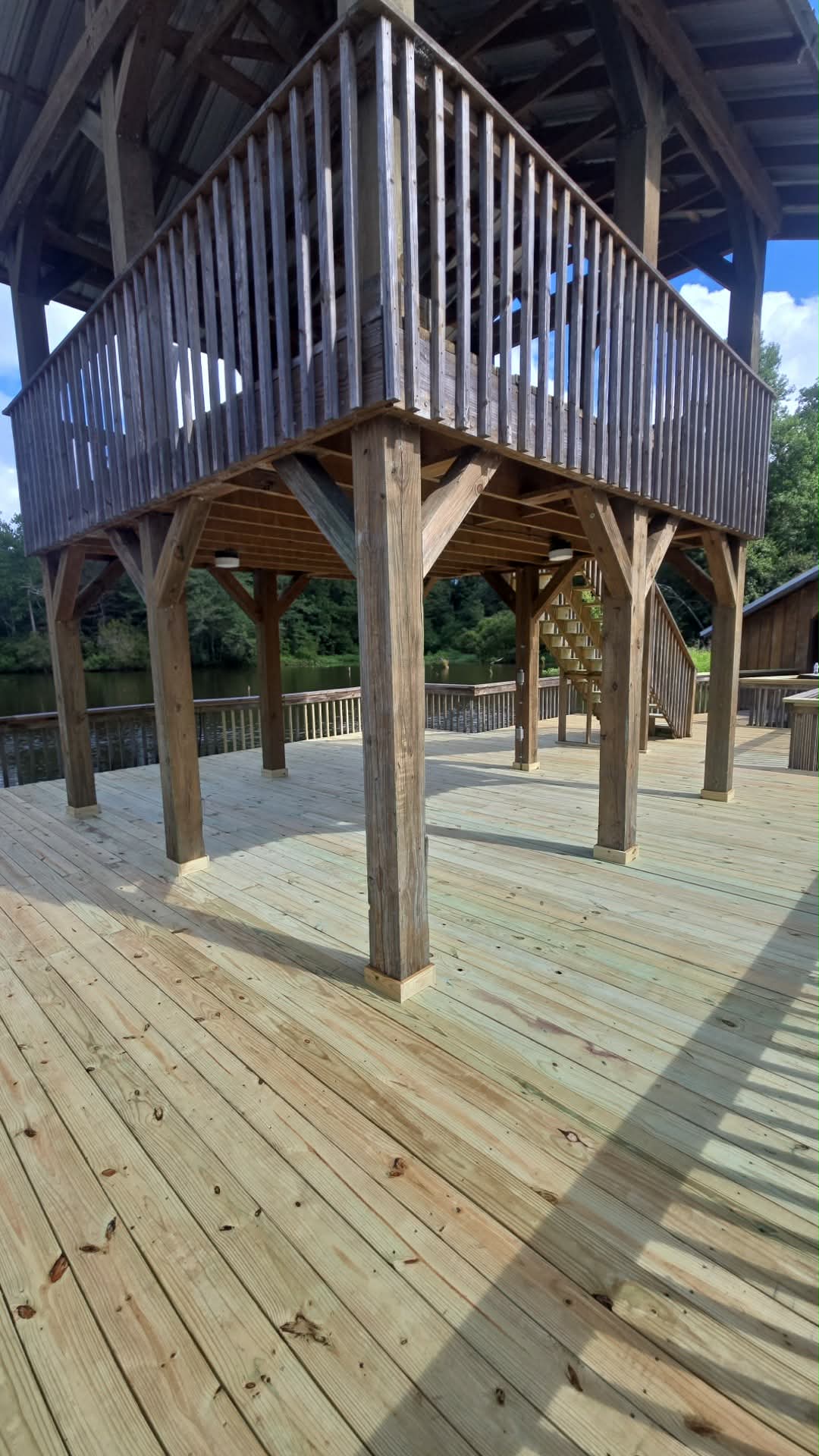
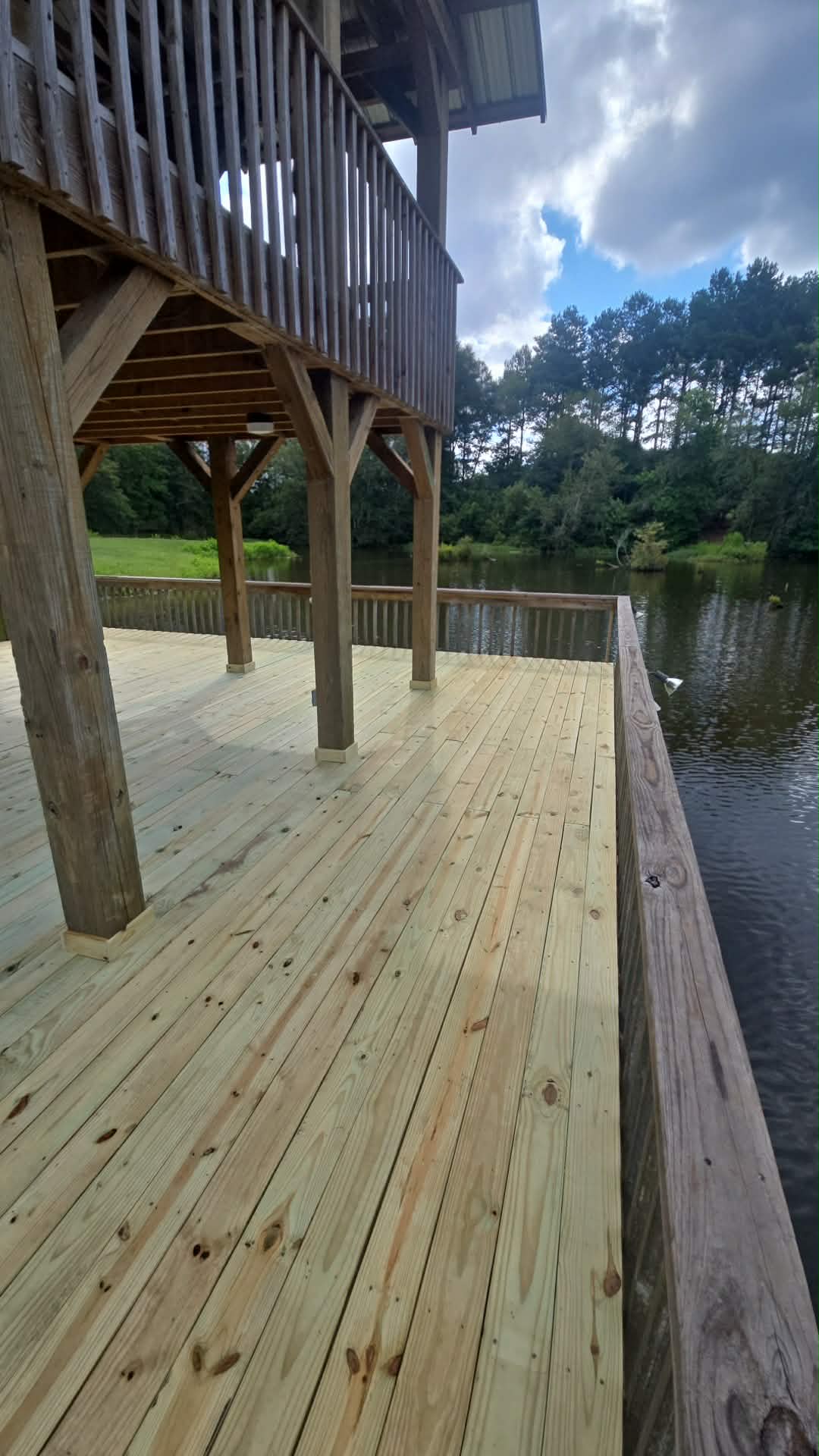
Rot is sneaky. A pier or dock can look perfectly fine from the top while the framing underneath is silently failing. By the time you feel that soft spot underfoot, the damage has usually already spread - and what started as a simple repair can turn into a safety problem fast. That's exactly what we were dealing with on this job.
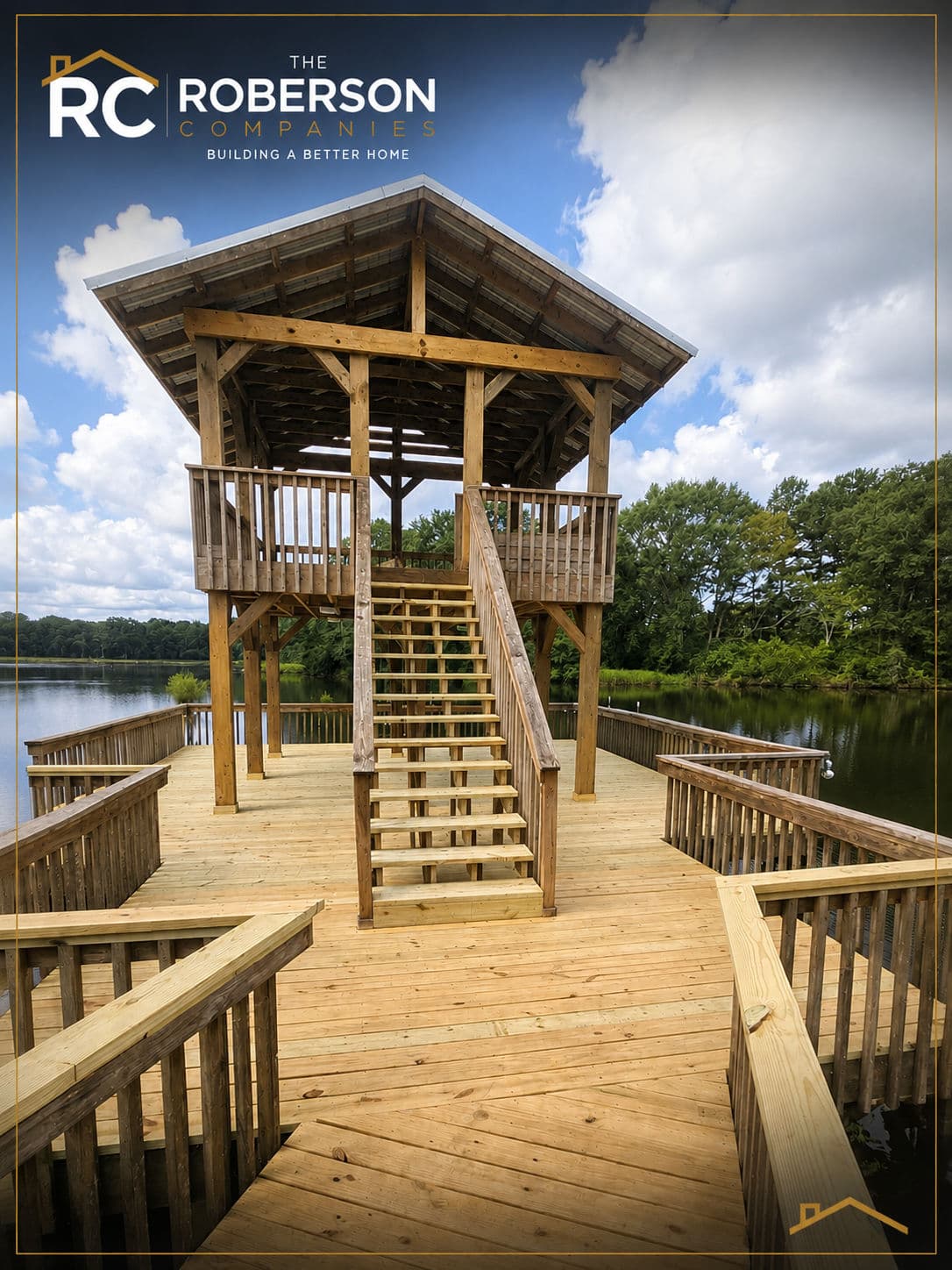
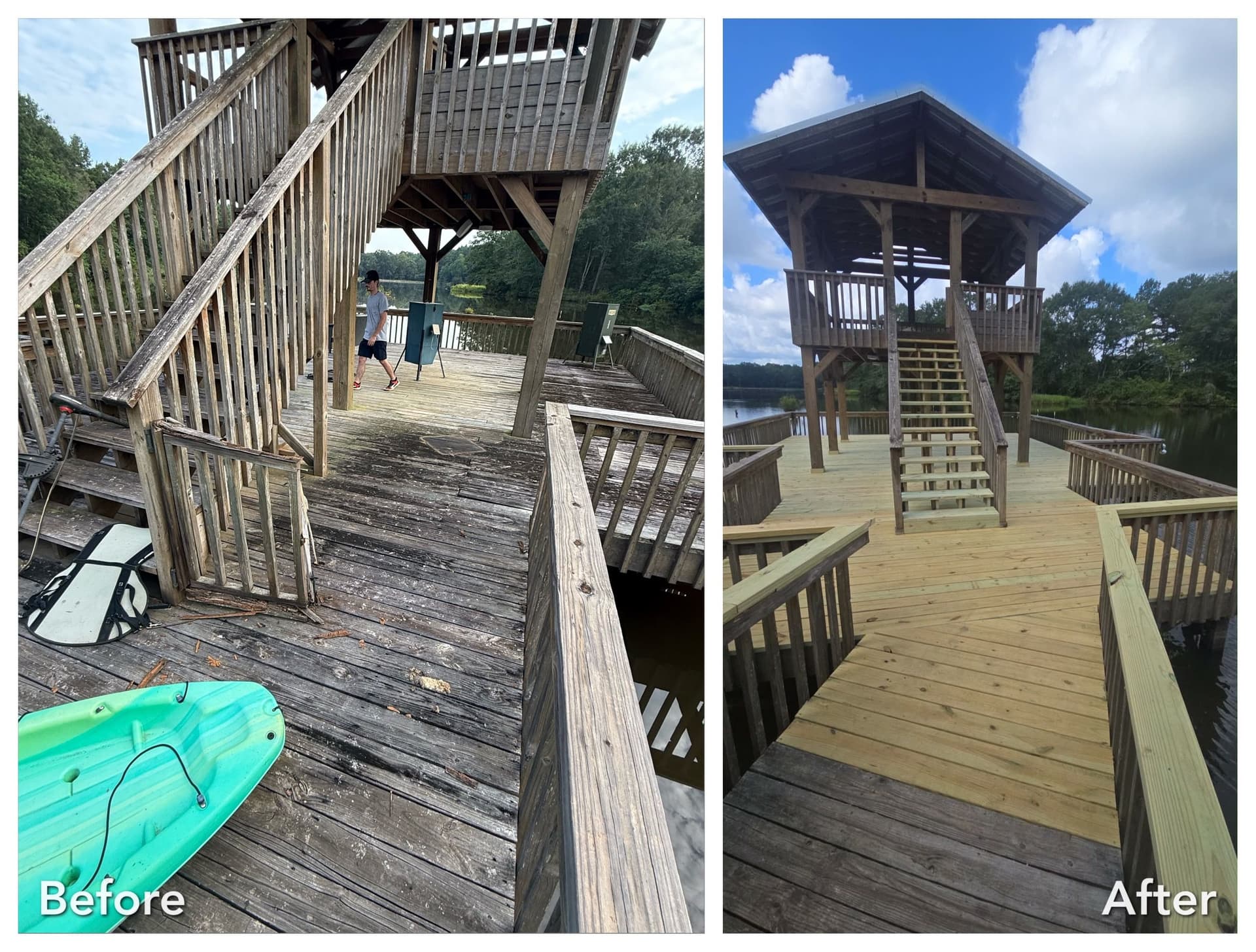
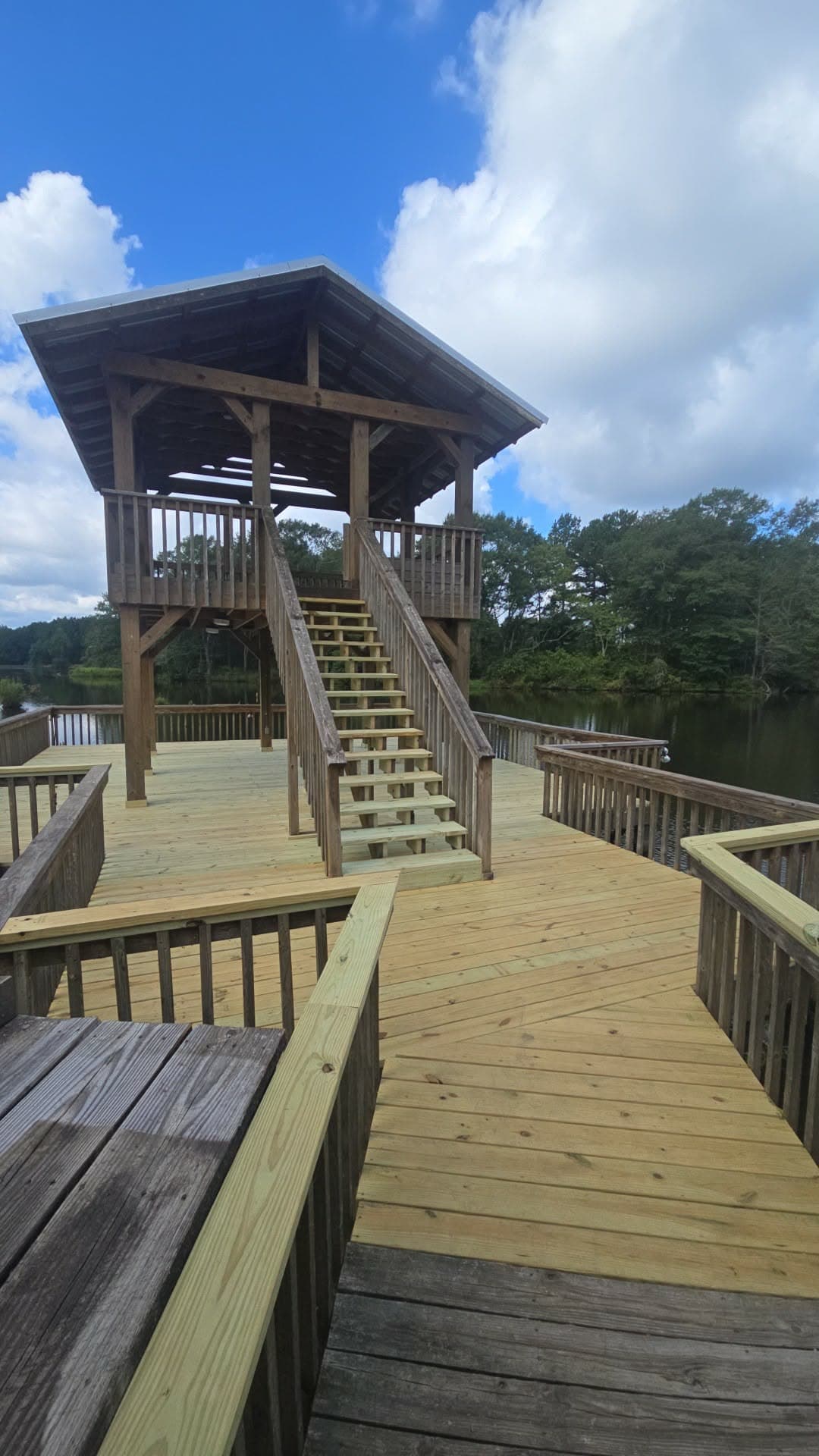
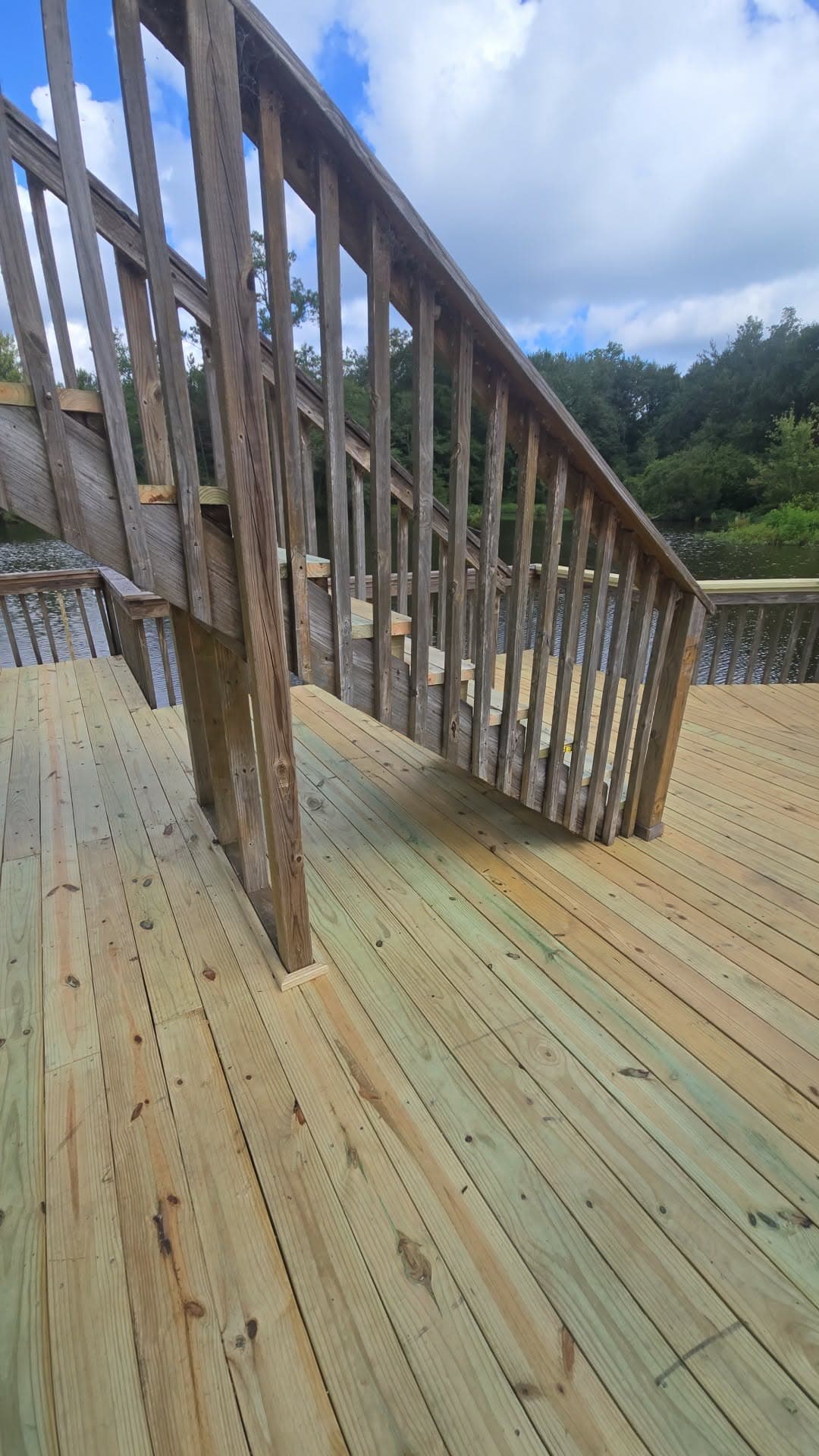
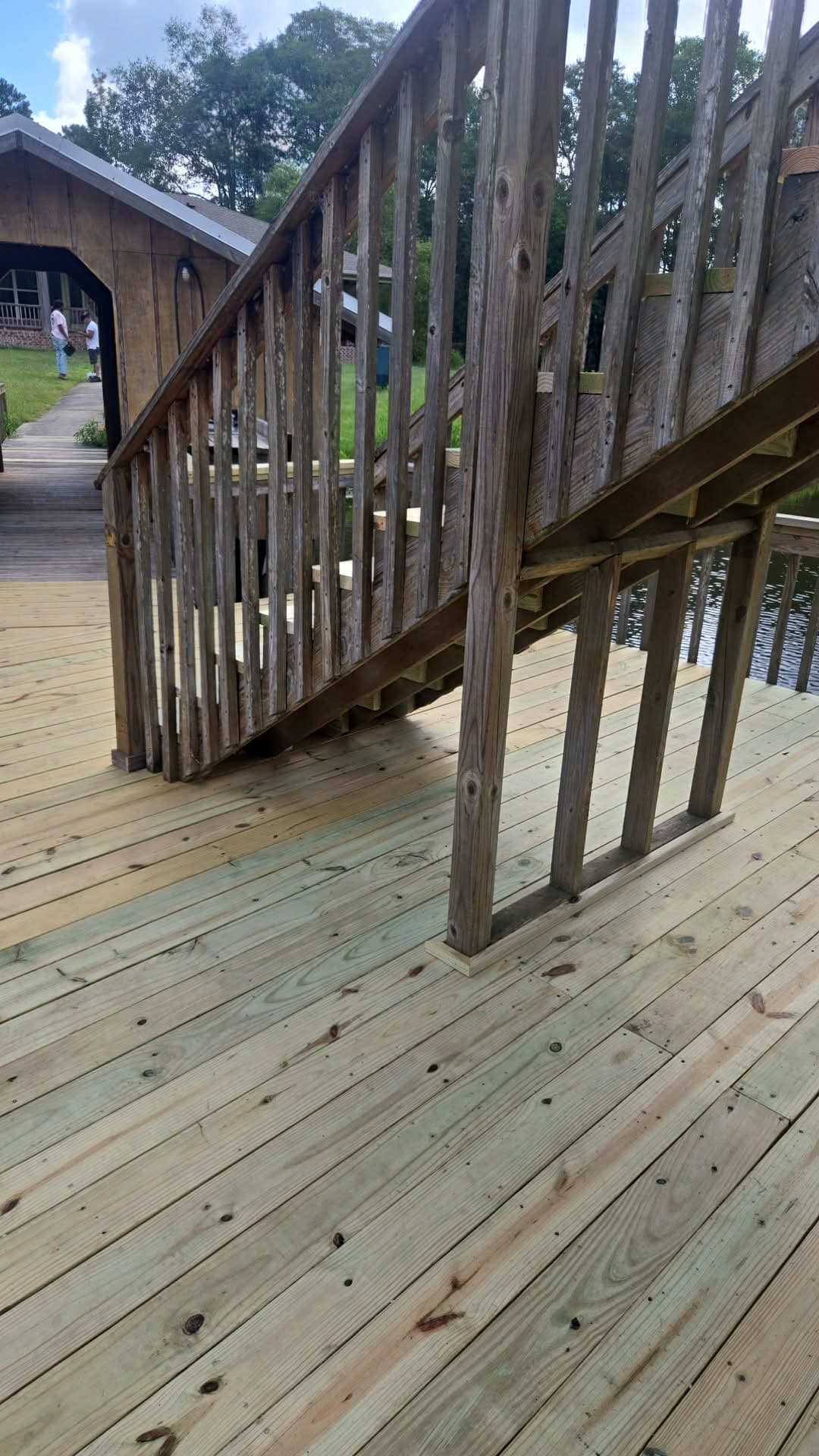
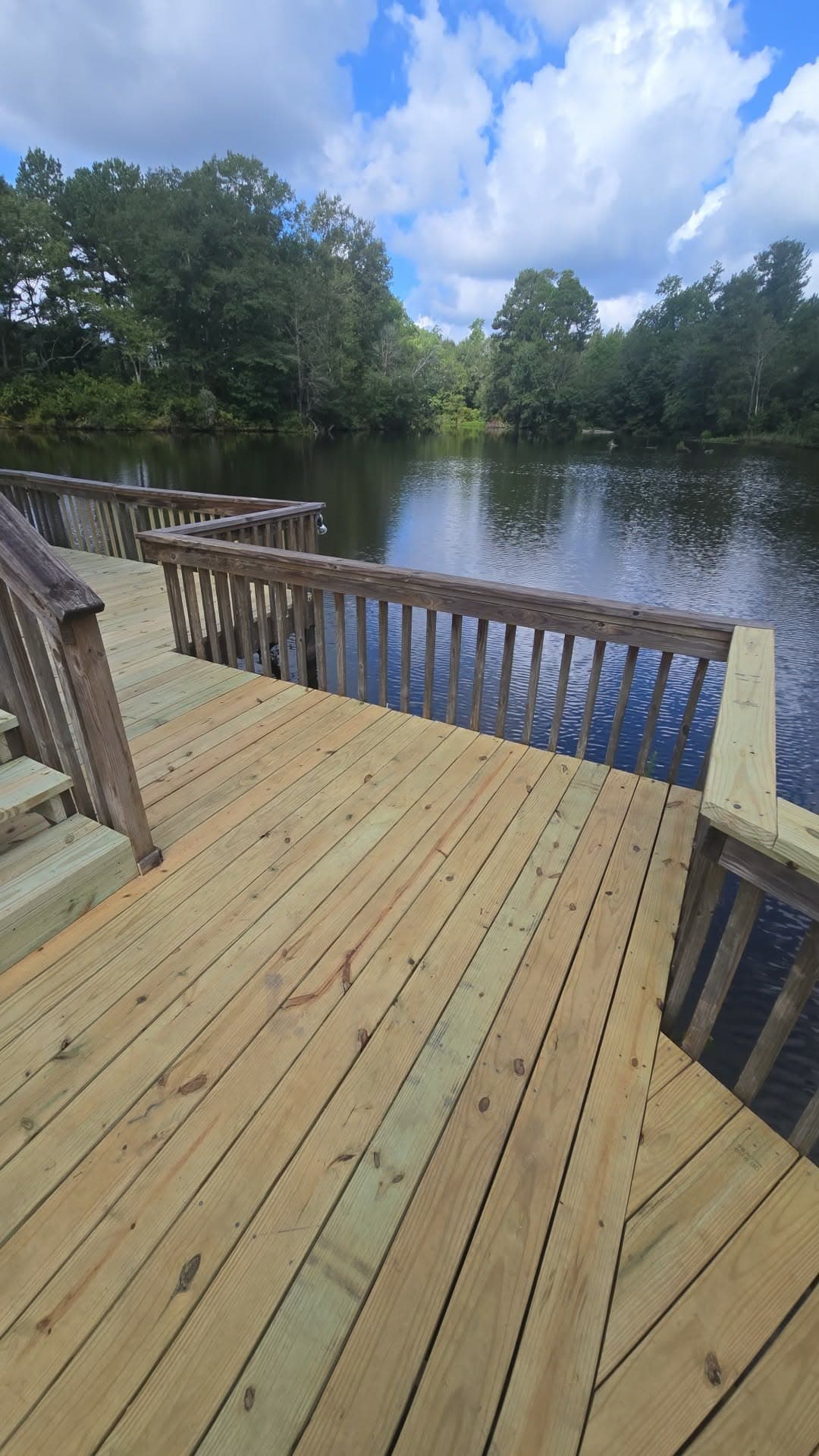
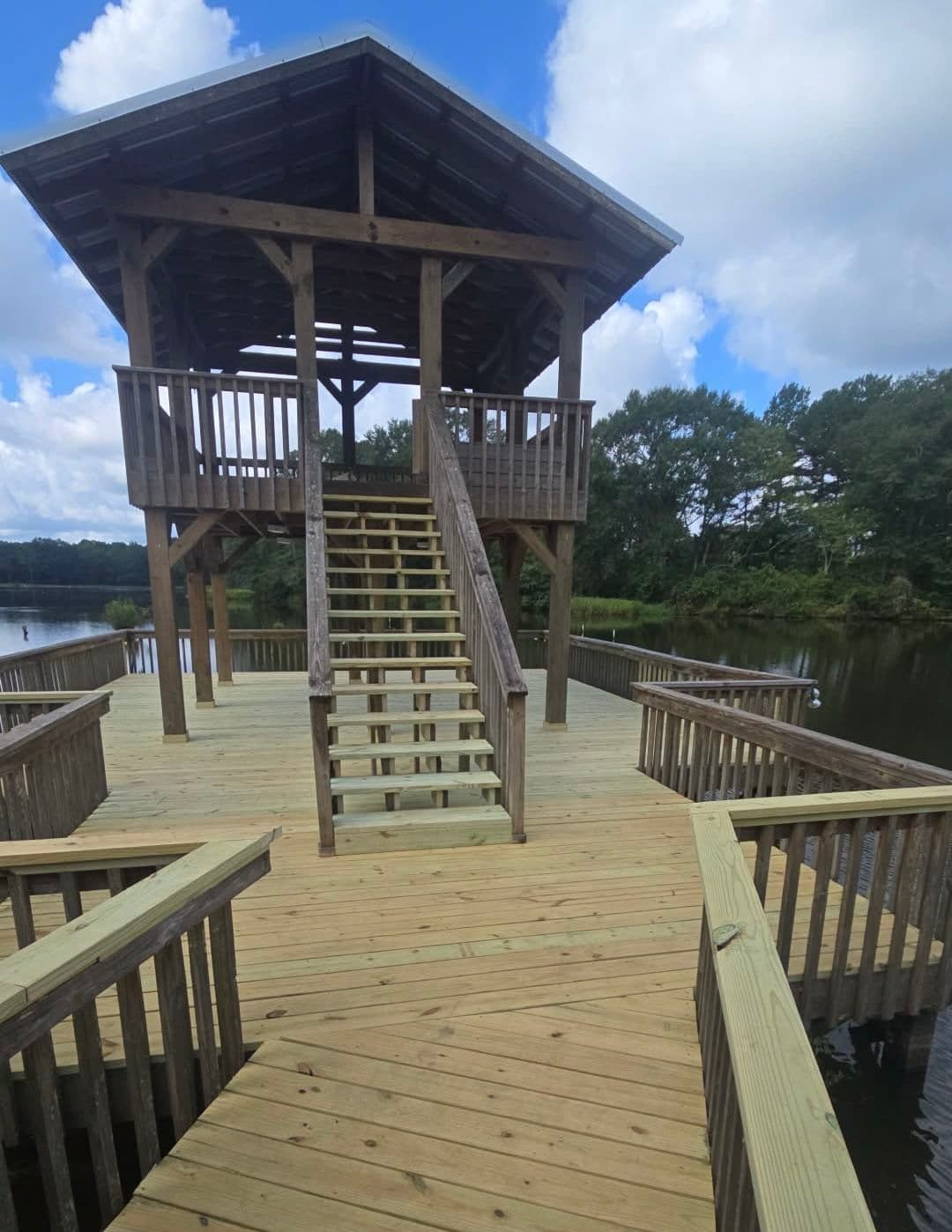
We started by pulling up the old decking and getting into the framing. What we found confirmed the concern - damaged structural members that needed to go. We rebuilt the framing, then laid down fresh pressure-treated boards across the entire deck surface. The difference between old and new lumber side by side tells the whole story. The original boards were gray, cracked, and worn through in spots. The replacement boards went down clean, tight, and solid.
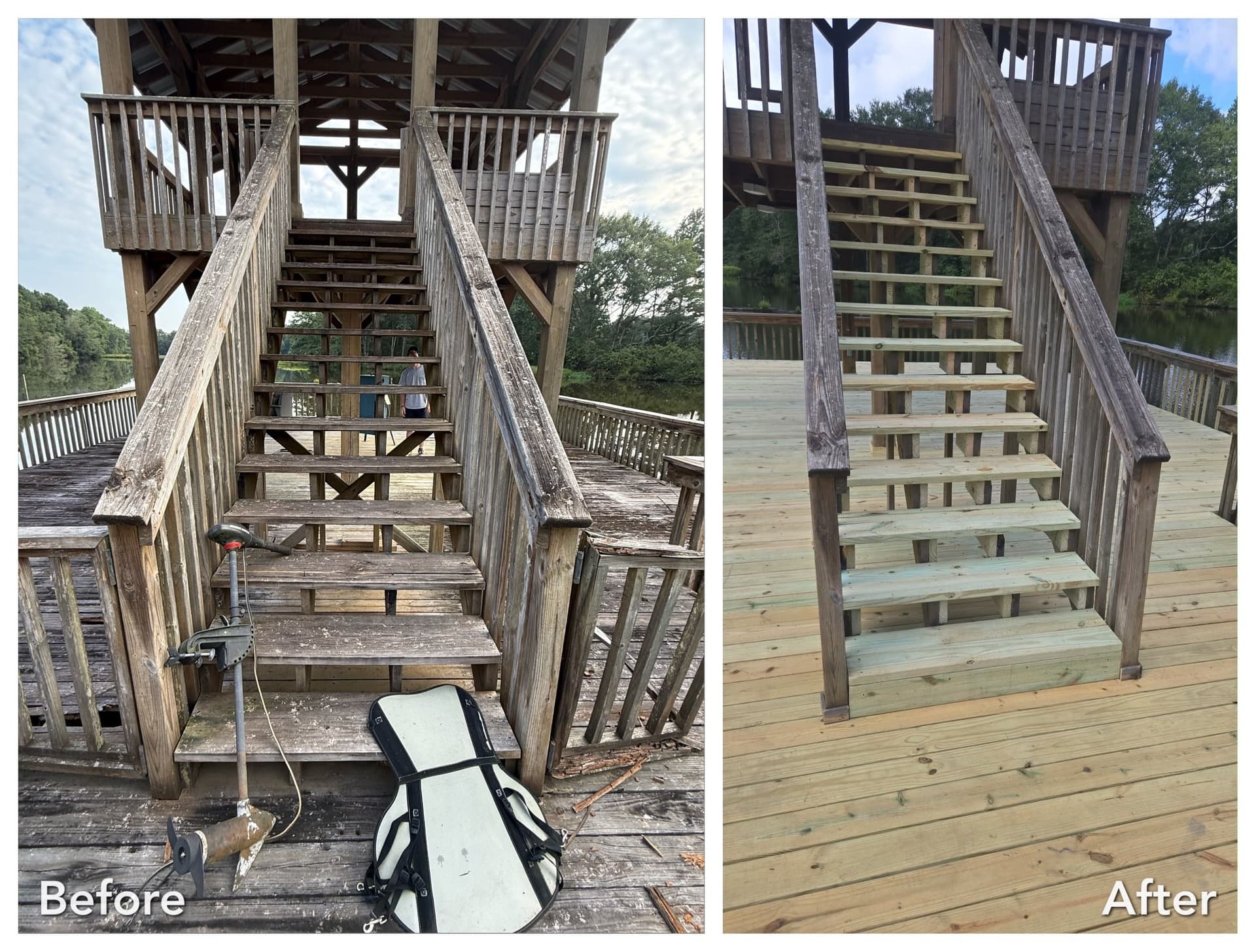
The staircase got a full rebuild too. The before shows stairs that were weathered down to bare, splintering wood with loose components throughout. The after is a completely new set of treads and risers - uniform, sturdy, and built to handle years of use. We also repaired the sections of handrail that had deteriorated, so the whole structure is safe from the deck level all the way up to the covered observation platform above.
One detail worth calling out - we used screws instead of nails throughout. Nails back out over time, especially in wood that goes through constant wet-dry cycles near water. Screws hold. It's a small decision that makes a real difference in how long the repair lasts and how solid everything feels underfoot.
The end result is a pier that's safe, structurally sound, and genuinely enjoyable to use again. If you've got a dock, pier, or waterfront deck that feels questionable - soft spots, wobbly railings, stairs that shift when you step on them - don't let it sit. Those problems don't fix themselves.